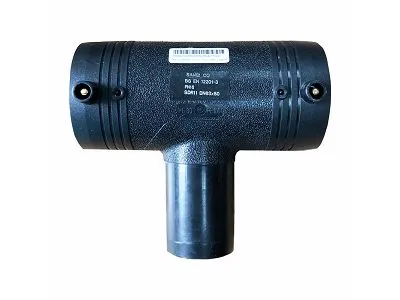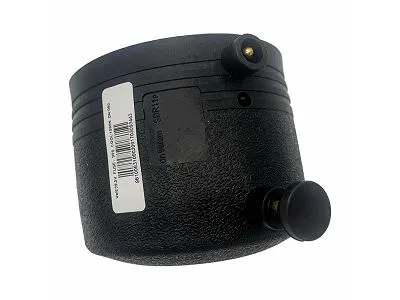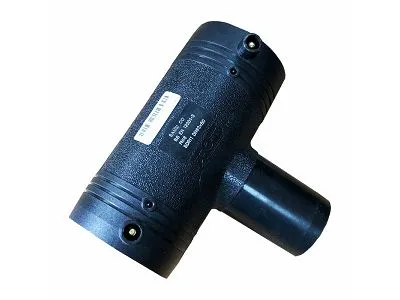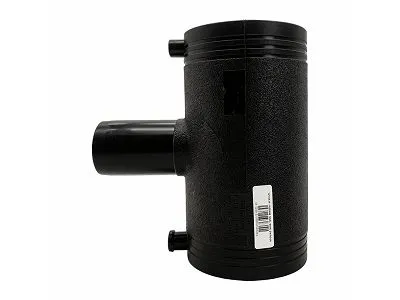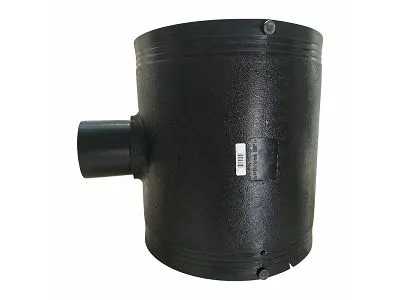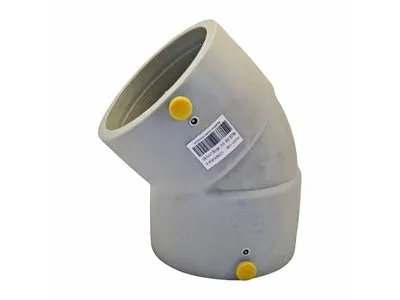

PERT pipe fittings are pipe connections made of heat-resistant polyethylene (PE), widely used in building water supply, heating systems, and underfloor heating projects. Their core advantages lie in their excellent high-temperature resistance, flexibility, and long-term hydrostatic strength, making them suitable for medium- and low-temperature fluid transport. As an important component of polymer piping systems, PERT pipe fittings have a clear engineering application positioning in both civil and industrial building sectors.
From a technical perspective, PERT pipe fittings are manufactured using advanced co-extrusion or injection molding processes, possessing excellent creep resistance and chemical corrosion resistance. Their connection methods primarily employ butt fusion or electrofusion connections, ensuring the interface sealing is consistent with the pipe body, effectively reducing the risk of leakage. Compared to traditional metal pipe fittings, PERT pipe fittings are lighter, easier to install, and maintain good impact resistance even in low-temperature environments, making them particularly suitable for the long-term stable operation of underfloor heating systems in cold regions.
In practical applications, PERT pipe fittings are mainly used in conjunction with PERT pipes to form a complete low-temperature hot water radiant heating system. This system circulates hot water through pipes buried under the floor, achieving uniform heat dissipation and featuring high thermal efficiency and excellent comfort. Furthermore, PERT pipe fittings are gradually replacing some traditional materials in centralized heating secondary networks, central air conditioning water systems, and domestic hot water supply, demonstrating excellent engineering adaptability and reliability.
With the increasing standards for building energy conservation and the promotion of green building concepts, the demand for efficient, durable, and environmentally friendly piping systems continues to grow. PERT pipe fittings, due to their recyclability, non-toxicity, odorlessness, and service life of over 50 years, meet the requirements of sustainable development. Simultaneously, the introduction of intelligent manufacturing technology has improved the precision and consistency of pipe fitting production, further enhancing its competitiveness in high-end building projects. In the future, with the development of prefabricated buildings and smart pipe networks, PERT pipe fittings are expected to expand into new application dimensions in system integration and intelligent monitoring.
Overall, PERT pipe fittings are steadily increasing in terms of technological maturity, application breadth, and market acceptance. Despite competition from similar materials such as PPR and PB, PERT pipe fittings possess comprehensive advantages in flexibility, temperature range, and ease of construction, making them irreplaceable in specific applications. With advancements in materials science and improvements in engineering standards, the PERT pipe fitting industry will continue to evolve towards high performance and high reliability, promising a broad market prospect.